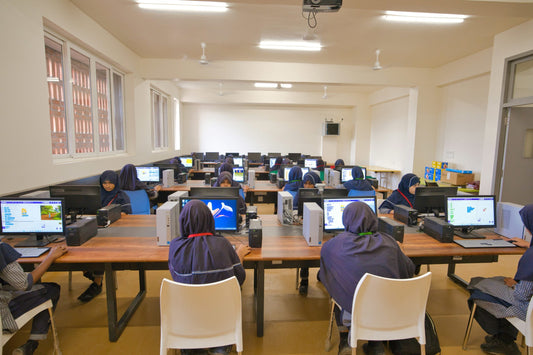
Every year on September 8, International Literacy Day (ILD) is marked worldwide as a reminder that literacy is more than a skill, it is a human right, a driver of development, and a foundation for lifelong learning. First proclaimed by UNESCO in 1966, ILD continues to highlight both the progress achieved and the challenges that remain nearly six decades later.
According to UNESCO’s Institute for Statistics (UIS), as of September 2025, about 739 million adults worldwide still lack basic reading and writing skills, and nearly two-thirds of them are women. This marks a slight improvement from earlier estimates of 763 million in 2020, but it shows that literacy is far from universal. For educators, students, parents, and policymakers, International Literacy Day is not only a moment to reflect on traditional literacy but also a chance to expand our understanding of what it means to be literate in today’s world.
Why Literacy Matters Today
Literacy opens doors. It gives people the ability to access education, find decent work, participate in society, and improve their lives. UNESCO highlights that higher literacy levels are consistently linked to:
- Better health outcomes (literate people are more likely to understand medical instructions and health information).
- Greater economic opportunities (those with literacy skills are more likely to secure stable employment).
- Civic engagement (literacy supports participation in democratic processes and community life).
Yet, literacy challenges remain uneven. Regions such as Sub-Saharan Africa and South Asia still face the highest rates of illiteracy, often tied to poverty, gender inequality, and limited access to schooling. For educators, this global picture underscores why literacy remains a shared responsibility.
Expanding the Definition of Literacy
Traditionally, literacy meant the ability to read and write. But in a world shaped by technology, data, and finance, this definition is no longer enough. Organizations like UNESCO and the OECD stress that “literacy must be redefined for the 21st century.”
Here are three critical literacies that are increasingly essential:
1. Digital Literacy
UNESCO defines digital literacy as the ability to use digital tools and platforms “to access, manage, understand, integrate, communicate, evaluate, and create information safely and appropriately.”
- For students: This means knowing how to evaluate online information, recognize misinformation, and protect personal data.
- For educators: It means integrating technology into lessons responsibly, so learners are prepared for digital-first workplaces.
2. Data Literacy
The Organisation for Economic Co-operation and Development (OECD) describes data literacy as the “ability to access, interpret, critically assess, manage, handle and ethically use data.”
- For students: It’s about reading graphs, interpreting statistics, and making decisions based on reliable evidence.
- For educators: Embedding data analysis into different subjects, from science experiments to social studies, helps students build real-world problem-solving skills.
3. Financial Literacy
The OECD defines financial literacy as a “combination of awareness, knowledge, skill, attitude and behavior necessary to make sound financial decisions and achieve financial well-being.”
- For students: This can be as simple as understanding budgeting, saving, and responsible use of credit.
- For parents: Involving children in family financial discussions builds habits that carry into adulthood.
- For educators: Linking math lessons to real-life financial examples makes learning relevant.
For Educators: Preparing Students for a Literacy-Rich Future
Educators are at the heart of International Literacy Day. Here are some practical ways teachers and schools can expand literacy beyond reading and writing:
1. Teach critical thinking alongside reading
When students analyze a news article, ask them: Who wrote this? What is the source? What is the evidence? This builds both reading comprehension and digital literacy.
2. Incorporate financial examples into lessons
Even simple classroom activities like creating a mock budget for a school event, can introduce financial concepts.
3. Use data in everyday contexts
Encourage students to interpret data from surveys, weather charts, or sports statistics. This helps them see data literacy as part of daily life.
4. Make literacy cross-curricular
Literacy isn’t just for language classes. In science, literacy involves reading lab reports. In art, it can mean interpreting visual media. In history, it’s about analyzing documents.
For Students: Why Literacy Is Your Superpower
Students often think of literacy as something you “finish” in school. In reality, literacy is a life skill that evolves with you.
- A student who is digitally literate can spot misinformation online, protecting themselves from scams.
- A student with financial literacy can manage their allowance or first paycheck wisely.
- A student with data literacy can analyze statistics in sports or social issues, making them more informed and capable decision-makers.
Literacy is not just about passing exams. It is about being prepared for university, careers, and citizenship in a world that demands adaptability.
For Parents: Building a Literacy-Friendly Home
Parents are powerful allies in literacy development. UNESCO research shows that children raised in literacy-rich environments perform better in school. Here are simple strategies:
- Read together regularly. Even older children benefit from shared reading and discussion.
- Talk about online content. Ask questions about what your child is watching, reading, or sharing.
- Introduce financial discussions. Involve children in planning for groceries, saving for a family outing, or comparing prices.
- Celebrate curiosity. Encourage questions and exploration, whether about a science experiment or a news headline.
For Policymakers and Communities: Creating Systems that Support Literacy
International Literacy Day is also a call for action at the community and national levels. UNESCO urges governments to invest in lifelong learning systems that ensure literacy for all ages. Examples include:
- Expanding adult education programs, especially for women who remain disproportionately affected by illiteracy.
- Integrating digital skills training into national education curricula.
- Supporting public libraries and community centers as accessible literacy hubs.
Community leaders can partner with schools, NGOs, and private organizations to provide resources and mentorship. Literacy is not built by schools alone, it requires a whole-society approach.
Actionable Ideas for International Literacy Day 2025
Educators and schools can mark ILD with activities that make literacy visible and engaging:
- Host a “Digital Fact-Checking Challenge” where students practice spotting fake news.
- Run a budgeting workshop that introduces basic financial literacy concepts.
- Invite parents for a literacy night to showcase how learning continues at home.
- Celebrate multilingualism by encouraging students to share stories in their home languages, highlighting literacy’s cultural richness.
Looking Ahead: Literacy in a Changing World
The future of literacy is broader than ever. Artificial intelligence, big data, and global connectivity are reshaping the skills people need. UNESCO stresses that achieving Sustainable Development Goal 4 (Quality Education for All) depends on integrating these new literacies into education systems worldwide.
For educators, this means asking: Am I preparing my students not just to read and write, but to thrive in a complex, digital, data-driven, and financially demanding world?
For students, it means realizing that literacy is not a subject to pass, but a lifelong toolkit for success.
For parents and policymakers, it means supporting environments that make literacy accessible, relevant, and future-focused.
Final Reflection
International Literacy Day is more than a symbolic event. It is a reminder that literacy is evolving, and so must we. Reading and writing remain at the core, but to be truly literate in 2025 is to understand information critically, navigate digital spaces responsibly, use data effectively, and make informed financial choices.
By expanding how we define and teach literacy, we give today’s learners not just the skills to survive but the skills to lead, innovate, and shape the future.
Sources:
- UNESCO. Global Education Monitoring Report 2025.
- UNESCO. International Literacy Day 2023 & 2024 materials.
- OECD. PISA and Education 2030 definitions of literacy.
- OECD/INFE. Measuring Financial Literacy: Core Questionnaire 2022.